
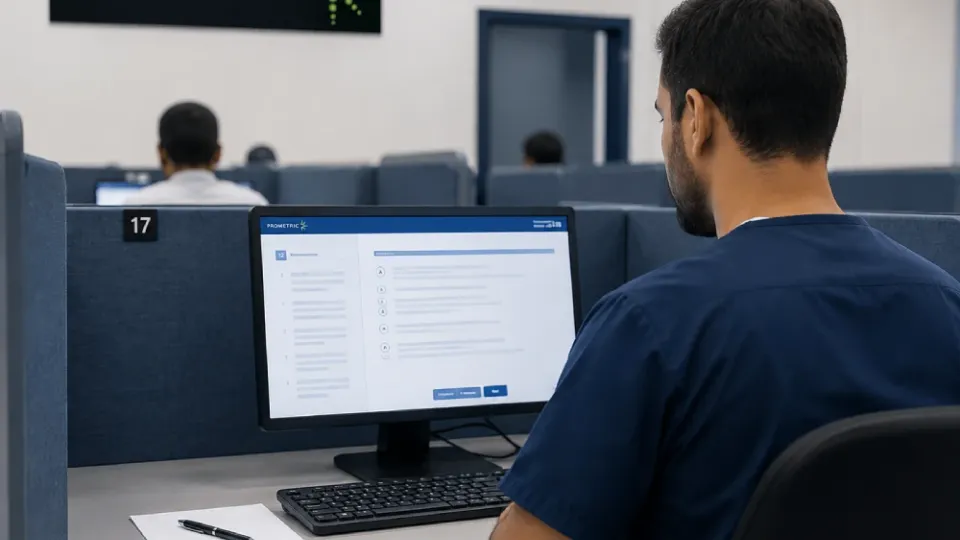
The Prometric test is a standardized, computer-based examination crucial for healthcare professionals seeking licensure and registration in several countries across the Gulf Cooperation Council (GCC) region. It assesses the candidate's knowledge and competency to ensure they meet the required standards for safe and effective practice. Successful completion is often a mandatory step to obtaining a professional license from local health authorities like SCFHS, DHA, DoH, and QCHP.
What is the Prometric Test?
The Prometric test is a globally recognized computer-based examination designed to evaluate the skills and knowledge of candidates across various professions, including healthcare. For healthcare practitioners, it serves as a critical gateway to professional licensure in countries such as Saudi Arabia, the UAE, Qatar, and Oman. These exams are developed in collaboration with specific health authorities to ensure alignment with national healthcare standards and practices.
Who Needs to Take the Prometric Exam?
A wide range of healthcare professionals are required to pass a Prometric exam, depending on the specific country and health authority. This typically includes:
- Physicians (General Practitioners, Specialists)
- Nurses (Registered Nurses, Practical Nurses)
- Dentists
- Pharmacists
- Allied Health Professionals (e.g., Radiographers, Medical Laboratory Technicians, Physical Therapists)
Candidates must confirm the exact requirements for their specific profession and desired destination country.
Which Countries and Health Authorities Require Prometric?
The Prometric test is a key component of the licensing process in several GCC countries:
- Saudi Arabia: Required by the Saudi Commission for Health Specialties (SCFHS) for most healthcare professionals.
- United Arab Emirates: Required by the Dubai Health Authority (DHA) for Dubai, the Department of Health (DoH, formerly HAAD) for Abu Dhabi, and the Ministry of Health and Prevention (MoHAP) for other Emirates.
- Qatar: Required by the Qatar Council for Healthcare Practitioners (QCHP).
- Oman: Required by the Ministry of Health (MoH) Oman.
How to Prepare for the Prometric Exam?
Effective preparation is key to passing the Prometric exam. Consider the following strategies:
- Review Official Syllabi: Access the specific syllabus or blueprint for your profession's exam, usually available on the respective health authority's website.
- Study Relevant Medical Literature: Focus on core medical knowledge pertinent to your specialty and general medical practice.
- Utilize Practice Tests: Many online platforms and study guides offer practice questions formatted similarly to the actual exam.
- Time Management: Practice answering questions under timed conditions to improve speed and accuracy.
- Understand Exam Structure: Familiarize yourself with the computer-based format and navigation.
The Prometric Exam Format and Scoring
The Prometric exam is typically:
- Computer-Based: Administered at designated Prometric testing centers.
- Multiple-Choice Questions (MCQs): Questions usually present clinical scenarios requiring judgment and application of knowledge.
- Timed: Exams have a specific duration, usually ranging from 2 to 4 hours, depending on the profession and number of questions.
- Scoring: Results are often pass/fail or presented as a score against a required passing percentage (e.g., 60-70%). Results are usually available immediately or within a few days.
Registration Process for the Prometric Exam
The registration process typically involves:
- DataFlow Verification: Most health authorities require primary source verification (PSV) of your credentials through DataFlow Group before you can apply for the exam.
- Eligibility Assessment: Apply to the relevant health authority (e.g., SCFHS, DHA) for an eligibility number or permission to book the exam.
- Prometric Website Booking: Once eligible, visit the Prometric website (www.prometric.com) to search for your specific exam, find a testing center, and schedule your exam date and time.
- Payment: Pay the exam fee directly to Prometric.
- Confirmation: Receive a confirmation email with details of your appointment.
Ensure all documents are accurate and complete to avoid delays.
Important Considerations for Healthcare Professionals
- Validity: Exam results often have a validity period (e.g., 2-5 years), after which you may need to retake the exam or fulfill other requirements.
- Re-attempts: Policies on re-attempts vary by health authority, often with a waiting period between attempts.
- Identification: Bring valid, government-issued identification to the testing center.
The Prometric exam is a critical step for healthcare practitioners aiming to practice in the Gulf region. Thorough preparation and understanding of the process are essential for success.