
DataFlow verification, formally known as Primary Source Verification (PSV), plays a pivotal role in the Prometric exam process, especially for healthcare professionals seeking licensure in countries across the Gulf Cooperation Council (GCC) region. It is a mandatory step designed to authenticate a candidate's educational degrees, professional licenses, and work experience directly from their issuing sources, ensuring the integrity and credibility of their qualifications.
By rigorously checking credentials, DataFlow helps regulatory bodies confirm that applicants possess genuine qualifications and experience, which is fundamental for patient safety and maintaining high standards of healthcare practice. This verification process typically precedes or runs concurrently with the Prometric exam application, with many authorities requiring a positive DataFlow report before granting eligibility to sit for the exam.
What is DataFlow Group?
The DataFlow Group is a specialized company that provides Primary Source Verification (PSV) services. They act as an independent third party, commissioned by various governmental and regulatory bodies globally, particularly in the Middle East, to verify the authenticity of professional documents.
Why is DataFlow verification essential for healthcare professionals?
DataFlow verification is crucial for several reasons:
Ensuring Authenticity: It confirms that all submitted documents, such as academic degrees, professional licenses, and employment certificates, are genuine and have not been altered or forged.
Patient Safety: By verifying qualifications, regulatory authorities ensure that only competent and qualified professionals are granted licenses, thereby safeguarding patient health and safety.
Maintaining Standards: It upholds the professional standards and reputation of the healthcare system in the region.
Fraud Prevention: It acts as a robust deterrent against fraudulent applications and unqualified individuals attempting to practice healthcare.
What documents are typically verified by DataFlow?
DataFlow verifies a comprehensive range of documents, including but not limited to:
Educational Qualifications: Diplomas, bachelor's degrees, master's degrees, and PhDs.
Professional Licenses: Current and previous licenses to practice from the country of origin or previous employment.
Work Experience Certificates: Letters of employment, experience certificates detailing roles, responsibilities, and duration.
Good Standing Certificates: Issued by regulatory bodies to confirm no disciplinary actions were taken against the applicant.
Internship/Residency Completion Certificates: Where applicable for specific specialties.
How does DataFlow integrate with the Prometric exam process?
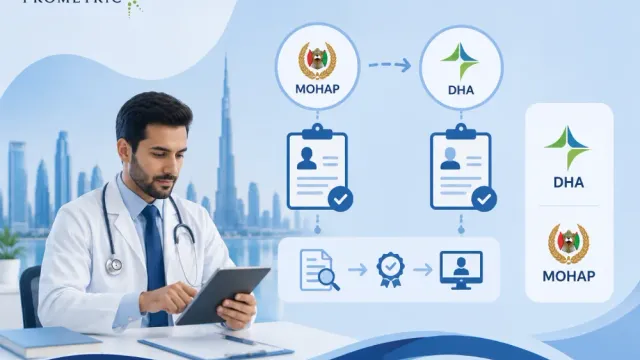
The integration of DataFlow with the Prometric exam process varies slightly among different regulatory bodies (e.g., SCFHS in Saudi Arabia, DHA in Dubai, DoH in Abu Dhabi, MoHAP in UAE). However, the general sequence is as follows:
Application Submission: Healthcare professionals submit their application and required documents to the relevant licensing authority.
DataFlow Initiation: The licensing authority or the applicant directly initiates the DataFlow verification process. All primary documents are uploaded or submitted.
Verification Period: DataFlow contacts the issuing bodies (universities, hospitals, licensing boards) directly to verify the authenticity of each document. This process can take several weeks to months.
Prometric Eligibility: In most cases, a positive DataFlow verification report (or at least proof of DataFlow initiation) is a prerequisite for receiving an eligibility ID or authorization to book a Prometric exam slot. Without a positive report, candidates may not be allowed to proceed with the exam.
Licensure: A successful Prometric exam result combined with a positive DataFlow report are both essential components for the final issuance of a professional healthcare license.
Key Considerations for Applicants
Start Early: Initiate your DataFlow application as soon as possible, as it is often the most time-consuming part of the licensing process.
Accuracy: Ensure all submitted information is accurate and matches your primary documents to avoid delays or negative reports.
Follow Up: Regularly check the status of your DataFlow application through their online portal.